


- Ayurveda clinic in Dubai
Shirodhara in Ayurveda: Benefits, Process & What to Expect
- by seo_admin
-
 Aug 16, 2026
 -
0 views
 Aug 16, 2026
  0 views
Shirodhara in Ayurveda: How It Works, Benefits & What to Expect
In today’s fast-paced world, many people in Dubai are turning to Ayurveda for natural ways to manage stress, support restful sleep, and restore inner balance. Among the most cherished Ayurvedic therapies is Shirodhara—a deeply relaxing treatment where a warm, continuous stream of oil (or other liquid) flows gently over the forehead and scalp.
At Atmara, a trusted Ayurvedic clinic in Dubai, Shirodhara is offered as part of personalized Ayurvedic care designed around your unique constitution and wellness goals. This article explains what Shirodhara is, how it works in traditional Ayurveda, its potential benefits, and exactly what to expect before, during, and after a session—so you can decide if this therapy fits your self-care routine.
What Is Shirodhara in Ayurveda?
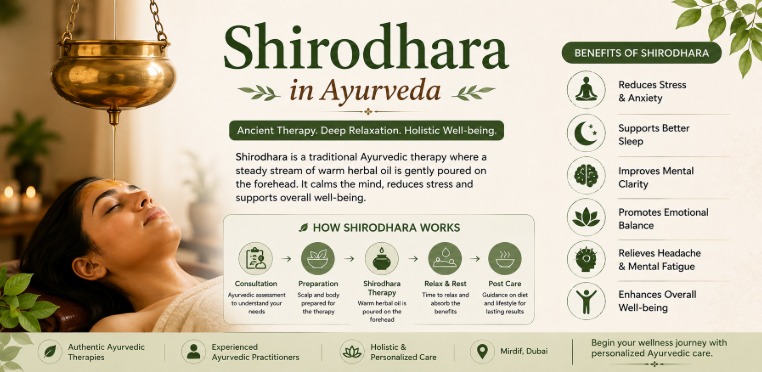
Shirodhara comes from two Sanskrit words: Shiro (head) and Dhara (flow). In simple terms, it is an Ayurvedic therapy in which a steady, gentle stream of warm liquid—most often herbal oil, but sometimes milk, buttermilk, or water—is poured over the forehead, typically focusing on the area between the eyebrows (the “third eye” region).
In classical Ayurveda, Shirodhara is considered a calming, nourishing therapy that helps soothe the nervous system and promote mental clarity. The exact liquid used is not one-size-fits-all; an Ayurvedic practitioner may select sesame oil, coconut oil, or a medicated herbal oil based on your body type (Prakriti), current imbalances (Vikriti), and specific concerns such as stress, tension, or sleep difficulties.
Because it works primarily through relaxation and sensory calming, Shirodhara is often described as a meditative, restorative experience rather than a vigorous massage.
How Does Shirodhara Work?
From a traditional Ayurvedic perspective, Shirodhara works by:
- Calming Vata dosha, which governs movement, nerve impulses, and mental activity.
- Nourishing the head and senses, supporting mental ease and emotional balance.
- Creating a rhythmic, predictable sensory input that helps the mind shift from “doing” mode to “resting” mode.
In practice, a typical Shirodhara session follows these steps:
-
Ayurvedic consultation and assessment
Your practitioner discusses your health history, lifestyle, stress levels, sleep patterns, and goals. This helps them choose the most suitable oil or liquid and tailor the session to your needs. -
Preparation for the therapy
You’ll be guided to lie comfortably on a treatment table, often with your head slightly elevated. Your eyes are gently covered with a soft cloth or cotton pads to protect them and help you turn your attention inward. -
Selection of appropriate oil or liquid
Based on your assessment, the practitioner may use warm sesame oil, coconut oil, or a herbal-infused medicated oil. The liquid is warmed to a comfortable temperature, close to body warmth. -
Continuous, gentle flow over the forehead
A specially designed vessel (sometimes called a Dhara Patra) is suspended a few inches above your forehead. Warm liquid flows in a thin, steady stream over the center of your forehead and sometimes across the scalp. This flow is maintained for a set period, often 30–45 minutes for the oil stream itself, with additional time for preparation and rest. -
Rest and relaxation after treatment
Once the flow stops, you’re given quiet time to rest before slowly sitting up. Many people feel deeply relaxed, calm, or even slightly drowsy afterward.
It’s important to note that while traditional texts and emerging studies suggest benefits for stress and sleep, Shirodhara is not presented as a cure for medical conditions. It is best viewed as a supportive wellness therapy within a broader self-care or treatment plan.
Potential Benefits of Shirodhara
Shirodhara is traditionally used and modernly sought for several wellness-oriented benefits. Most reported effects relate to relaxation, mental calm, and sleep support rather than direct medical treatment.
Commonly described benefits include:
- Deep relaxation – Many people experience a profound sense of calm during and after the session, often describing it as meditative or trance-like.
- Stress management – The rhythmic oil flow and quiet environment may help reduce feelings of mental tension and support the body’s relaxation response.journals.lww+1
- Supporting restful sleep – By calming the nervous system and easing mental chatter, Shirodhara may make it easier to fall asleep and enjoy more restorative rest.
- Promoting a sense of mental calm – Regular sessions are often used by people seeking emotional balance, mental clarity, and a break from constant stimulation.
- Relaxation of the head and scalp – The warm oil and gentle flow can ease tightness in the head, neck, and shoulder area, contributing to overall comfort.
- Supporting overall wellbeing – In Ayurveda, Shirodhara is seen as a Rasayana (rejuvenative) therapy that nourishes the mind and senses as part of holistic care.
Research, including small studies and case reports, suggests Shirodhara may help improve sleep quality and reduce perceived stress and anxiety, especially when combined with other Ayurvedic therapies. However, these findings are preliminary, and more large-scale studies are needed.
Shirodhara for Stress and Relaxation
Modern life in Dubai—long work hours, screen time, traffic, and constant connectivity—can leave many people feeling mentally fatigued and unable to “switch off.” Shirodhara appeals to those seeking a structured, guided way to relax without relying solely on willpower or apps.
People may choose Shirodhara as part of a relaxation-focused wellness routine because it:
- Provides a dedicated time to disconnect from devices and responsibilities.
- Uses gentle, predictable sensory input to calm an overactive mind.
- Encourages slow breathing and inward focus, which can support the parasympathetic (“rest and digest”) nervous system.
- Complements other stress-relief practices such as yoga, meditation, breathwork, and counseling.
In Ayurvedic terms, regular Shirodhara may help pacify aggravated Vata, which is often linked to anxiety, restlessness, and difficulty relaxing.
Can Shirodhara Support Better Sleep?
Sleep difficulties—trouble falling asleep, waking frequently, or feeling unrefreshed—are common reasons people explore Ayurvedic therapies. In traditional Ayurveda, Shirodhara is often recommended for:
- Calming the mind before bedtime routines
- Supporting deeper, more continuous sleep
- Reducing nighttime mental agitation
Small studies and case reports have observed improvements in sleep quality and reductions in insomnia symptoms following Shirodhara-based protocols. For example, one case series noted better sleep scores and reduced stress after a course of Shirodhara and related therapies.
That said, persistent insomnia or significant sleep disorders should be evaluated by a qualified healthcare professional. Shirodhara can be a helpful adjunct for relaxation and sleep support, but it is not a substitute for medical assessment or treatment when needed.
What to Expect During a Shirodhara Session
If you’re considering Shirodhara treatment in Dubai, here’s a typical step-by-step overview of what happens during a session at a professional Ayurvedic clinic in Dubai like Atmara:
-
Consultation
Your Ayurvedic practitioner asks about your health history, current concerns (stress, sleep, headaches, etc.), medications, and lifestyle. This helps them personalize the therapy. -
Treatment preparation
You’ll be shown to a quiet treatment room. The practitioner prepares the oil or liquid, warms it, and sets up the Shirodhara apparatus. You may be offered water and guided through a few calming breaths. -
Positioning
You lie on your back on a comfortable treatment table, often with a small pillow or support under your head. Your eyes are covered with soft cotton pads or a cloth. -
Oil selection and application
Based on your assessment, the practitioner selects an appropriate oil (e.g., sesame, coconut, or herbal-infused). They may begin with a brief massage of the shoulders, neck, and scalp to relax the muscles. -
Continuous oil flow
The warm liquid flows in a thin, steady stream over your forehead, typically focusing on the area between the eyebrows. The flow is continuous and rhythmic, creating a soothing, meditative effect. Many people feel so relaxed they drift into a light sleep. -
Typical relaxation experience
During the session, you might notice:- A warm, comforting sensation on the forehead and scalp
- Slower breathing and heart rate
- A quieting of mental chatter
- A sense of floating or deep calm
-
Post-treatment care
After the oil flow stops, the practitioner gently wipes excess oil and allows you a few minutes of quiet rest.
rest before you slowly sit up. You may be advised to avoid immediate exposure to strong sun, wind, or cold showers.
Session length can vary by clinic and individual plan. At many centers, the oil-flow portion lasts around 30–45 minutes, with total appointment time (including consultation and rest) closer to 60–75 minutes. For exact timings and protocols, it’s best to check directly with your chosen Ayurvedic clinic in Dubai.
How to Prepare for Shirodhara
To get the most from your Shirodhara therapy in Dubai, consider these practical tips:
- Share relevant health informationInform your practitioner about any medical conditions, surgeries, allergies, scalp or skin issues, and all medications or supplements you take.
- Discuss pregnancy or special conditionsIf you are pregnant, breastfeeding, or have chronic health issues, mention this during your consultation so the practitioner can adjust or advise accordingly.
- Wear comfortable clothingChoose loose, easy-to-remove clothing. You’ll typically remain clothed, but your hair and upper body may be draped with towels.
- Follow the clinic’s food and preparation instructionsSome clinics recommend avoiding heavy meals, caffeine, or stimulants for a few hours before the session to help your nervous system settle.
- Allow enough time to relax after treatmentPlan your schedule so you don’t need to rush immediately afterward. Many people prefer evening sessions or days off to fully enjoy the relaxed state.
- Bring a hair covering if desiredYour hair will likely be oily after the session. Some people bring a scarf or cap for the journey home, or plan to wash their hair later.
What Happens After Shirodhara?
Individual experiences vary, but common post-session effects include:
- Feeling relaxed and calm – Many people describe a lingering sense of peace, mental quiet, and emotional ease.
- Wanting to rest – It’s normal to feel sleepy or prefer a low-key rest of the day, especially after your first few sessions.
- Feeling refreshed or “lighter” – Some notice reduced head tension, clearer thinking, and improved mood.
- Hair and scalp oiliness – Depending on the oil used, your hair may feel oily for several hours. Most clinics recommend washing your hair with a mild shampoo later that day or the next morning.
Minor, temporary effects can include mild drowsiness, slight headache (if dehydrated or if you skipped meals), or sensitivity to bright light right after the session. Drinking water and resting quietly usually helps.
If you experience any unusual or persistent symptoms, inform your practitioner and, if needed, consult a healthcare professional.
Who May Benefit From Shirodhara?
Shirodhara may be especially appealing to people who are:
- Experiencing everyday stress, mental fatigue, or burnoutjournals.lww+1
- Seeking relaxation and a structured way to unwind guide.
- Looking to support better sleep routines without relying solely on medications.
- Interested in Ayurvedic wellness and holistic self-care
- Wanting a calming, meditative experience as part of their wellness routine
In Dubai, many wellness-conscious residents use Shirodhara alongside yoga, meditation, counseling, and lifestyle changes to support overall balance.
Who Should Consult a Doctor First?
While Shirodhara is generally gentle, certain individuals should seek medical advice before booking a session:
- Pregnant or breastfeeding individuals – to ensure the chosen oils and positioning are appropriate.
- People with serious medical conditions (e.g., uncontrolled hypertension, severe neurological disorders, recent head injury).
- Those with scalp or skin conditions, open wounds, infections, or known allergies to specific oils or herbs.
- Individuals on regular medications that affect blood pressure, sedation, or neurological function.
Your Ayurvedic practitioner should always review your health history and, when needed, coordinate with your primary healthcare provider.
Shirodhara vs. Regular Head Massage
While both Shirodhara and a regular head massage can feel relaxing, they differ in approach, focus, and level of personalization.
| Feature | Shirodhara | Regular Head Massage |
|---|---|---|
| Approach | Classical Ayurvedic therapy with specific protocols | General massage technique, not necessarily Ayurvedic |
| Main focus | Deep mental relaxation, nervous system calming, Ayurvedic balance | Muscle and scalp relaxation, tension relief |
| Treatment method | Continuous, warm liquid flow over the forehead/scalp | Manual kneading, pressing, and rubbing of scalp and neck |
| Personalization | Based on Ayurvedic assessment (dosha, health concerns) | Usually based on massage preference and pressure tolerance |
| Practitioner guidance | Ayurvedic practitioner or trained Shirodhara therapist | Massage therapist or spa practitioner |
| Typical experience | Meditative, inward-focused, often very still | More physical manipulation, can be invigorating or soothing |
If your primary goal is deep mental calm and Ayurvedic-style rejuvenation, Shirodhara may be more aligned with your needs. If you mainly want muscle tension relief in the head and neck, a regular head massage might suffice. Many people benefit from both, used at different times.
Why Choose Atmara for Ayurvedic Shirodhara in Dubai?
If you’re searching for Shirodhara in Dubai, Atmara offers a modern, integrative environment where Ayurveda meets functional medicine, naturopathy, physiotherapy, and gut health.
Key reasons people choose Atmara for Ayurvedic Shirodhara include:
- Personalized Ayurvedic care – Treatments are tailored to your body constitution (Prakriti), current imbalances (Vikriti), and specific health concerns.
- Qualified Ayurvedic practitioners – Atmara’s team includes Ayurvedic doctors and practitioners trained in classical therapies and modern wellness approaches.
- Authentic Ayurvedic therapies – Shirodhara is offered alongside other traditional treatments such as Abhyanga, Panchakarma-inspired detox, and Rasayana programs.
- Integrative wellness model – Ayurveda is combined with naturopathy, functional medicine, physiotherapy, and gut health programs for comprehensive care.
- Modern clinical environment – A clean, calming, professional setting in Mirdif, Dubai, designed for comfort and safety.
- Holistic programs – From stress and burnout recovery to hormonal balance and sleep support, Shirodhara can be integrated into broader wellness plans.
Atmara emphasizes root-cause care and long-term balance rather than quick fixes, making it a strong option for those seeking thoughtful, personalized Ayurvedic treatment in Dubai.
You can explore their
Ayurveda Treatment
page and related wellness programs to see how Shirodhara might fit
into your journey.
How to Choose an Ayurvedic Clinic for Shirodhara in Dubai
Not all clinics offer Shirodhara in the same way. When selecting an
Ayurvedic clinic in Dubai,
consider:
- Qualified Ayurvedic practitioners – Look for clinics with trained Ayurvedic doctors or therapists who can assess your constitution and health history.
- Personalized consultation – Avoid “one-size-fits-all” packages; your oil, duration, and frequency should be tailored to you.
- Clean, professional treatment environment – Hygiene, privacy, and comfort matter, especially for therapies involving oil and extended lying-down time.
- Appropriate treatment selection – A good clinic will explain why Shirodhara is (or isn’t) suitable for your situation and may suggest complementary therapies.
- Clear explanation of precautions – You should receive guidance on preparation, aftercare, and any contraindications.
- Proper follow-up – Ideally, the clinic offers follow-up consultations to adjust your plan based on how you respond.
Asking these questions before booking can help you find a safe, effective, and trustworthy place for Shirodhara therapy in Dubai.
Final Thoughts
Shirodhara is a classical Ayurvedic therapy in which a warm, continuous stream of oil or other liquid flows over the forehead to promote deep relaxation, mental calm, and support for restful sleep. People choose it as a gentle, non-invasive way to manage everyday stress, quiet an overactive mind, and nurture overall wellbeing.
Because Shirodhara is personalized in Ayurveda, working with qualified
Ayurvedic doctors in Dubai
ensures the therapy is matched to your body type, health status, and goals. Professional guidance also helps you understand realistic benefits, safety considerations, and how Shirodhara can fit into a broader wellness plan.
If you’re curious about Ayurvedic wellness in Dubai, a consultation with an experienced practitioner can help you decide whether Shirodhara is appropriate for you.
Interested in experiencing Shirodhara in Dubai? Connect with Atmara to discuss your wellness goals and find out whether this Ayurvedic therapy is appropriate for you.
FAQ Section
What is Shirodhara in Ayurveda?
Shirodhara is a traditional Ayurvedic therapy where a warm, steady stream of liquid—usually herbal oil, but sometimes milk, buttermilk, or water—is poured over the forehead and scalp. It is designed to calm the mind, relax the nervous system, and support mental balance according to Ayurvedic principles.
What are the benefits of Shirodhara?
Commonly reported benefits include deep relaxation, reduced feelings of stress, support for better sleep, and a greater sense of mental calm. Many people also notice relief from head and scalp tension and an overall feeling of rejuvenation. These effects are supportive and wellness-oriented rather than curative.
How does a Shirodhara treatment work?
During a session, you lie comfortably while a practitioner pours warm, medicated oil or another liquid in a continuous flow over your forehead for about 30–45 minutes. The treatment usually begins with a brief consultation and may include a light massage before or after the oil flow.
Is Shirodhara good for stress and relaxation?
Yes, Shirodhara is traditionally used and modernly sought for stress relief and relaxation. The rhythmic oil flow, quiet environment, and focused attention help many people shift into a deeply relaxed state, which can ease mental tension and support emotional balance.
Can Shirodhara help with sleep?
Shirodhara may support better sleep by calming the nervous system and reducing mental agitation before bedtime. Small studies suggest improvements in sleep quality when Shirodhara is used as part of an Ayurvedic protocol, but it should not replace medical evaluation for chronic insomnia.
What should I expect during a Shirodhara session?
You can expect a quiet, comfortable setting, a brief consultation, and then lying down with your eyes covered while warm oil flows steadily over your forehead. Many people feel very relaxed, sometimes drifting into light sleep. Afterward, you’ll rest briefly before getting up, with your hair and scalp feeling oily.
How should I prepare for Shirodhara?
Before your session, share your health history, medications, and any scalp or skin issues with your practitioner. Wear comfortable clothing, avoid heavy meals or excessive caffeine beforehand, and plan to rest afterward. Some clinics suggest avoiding stimulants to help your nervous system settle.
Is Shirodhara suitable for everyone?
Shirodhara is generally gentle, but it may not be suitable for everyone. Pregnant individuals, people with serious medical conditions, scalp infections, or certain allergies should consult a doctor first. Always discuss your health status with a qualified Ayurvedic practitioner before starting treatment.