


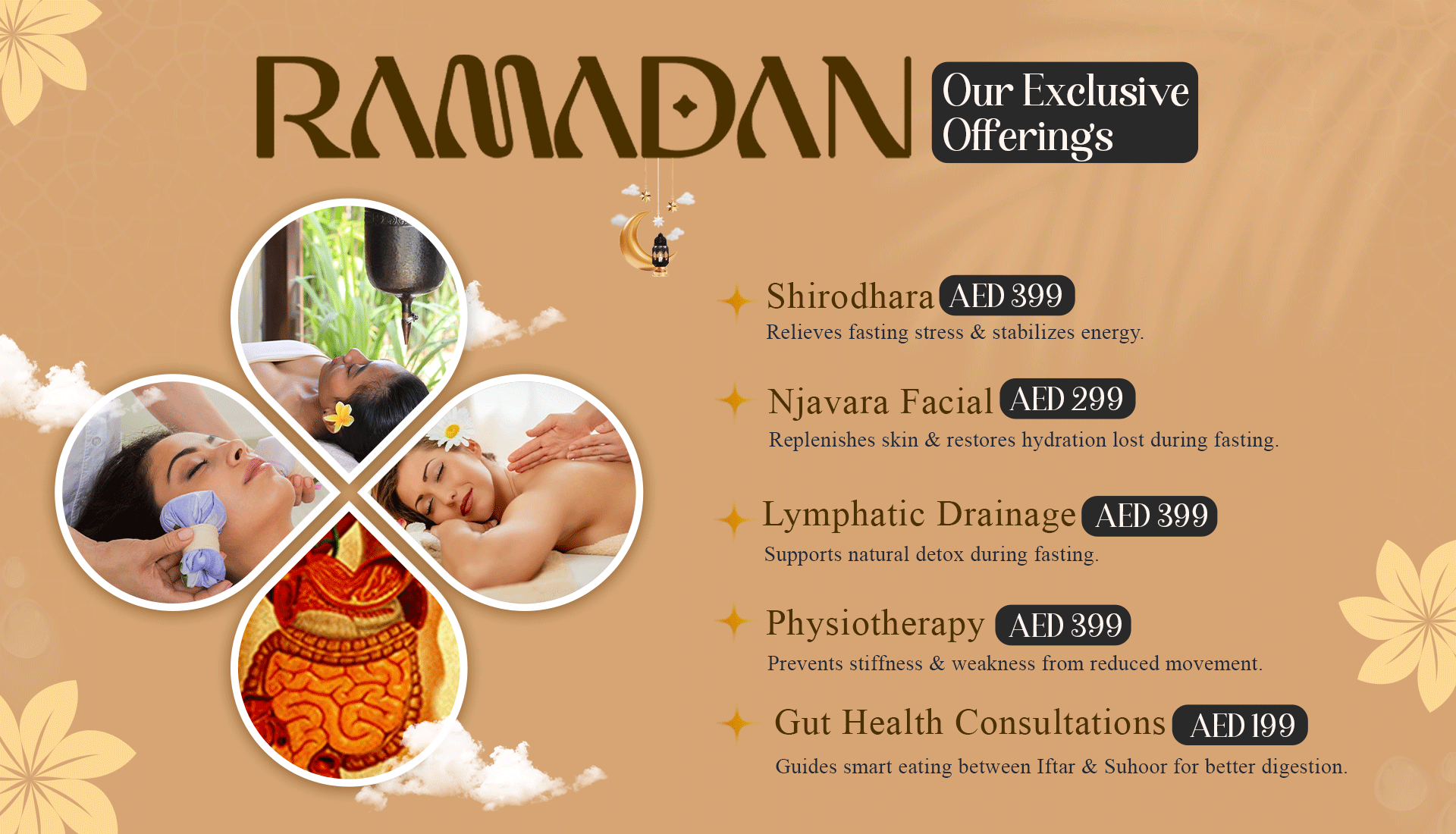
Ayurveda Tips for a Healthy Ramadan in Dubai: How to Stay Energetic While Fasting
- by seo_admin
-
 Feb 25, 2026
 -
0 views
 Feb 25, 2026
  0 views
Ayurveda Tips for a Healthy Ramadan in Dubai: How to Stay Energetic While Fasting
Ramadan is a beautiful time of spiritual reflection, discipline, and community. However, fasting for long hours—especially in Dubai’s warm climate—can also lead to tiredness, dehydration, digestive issues, and sleep imbalance. Many people experience low energy by mid-day, headaches, acidity, bloating, or weakness, particularly when Suhoor and Iftar meals are not balanced.
This is where Ayurveda can help. Ayurveda focuses on maintaining energy through proper digestion, hydration, routine, and food combinations. With the right habits, you can stay active and healthy throughout Ramadan without feeling drained. In this blog, we’ll share practical Ayurveda tips for a healthy Ramadan in Dubai and explain how to stay energetic while fasting using natural and holistic guidance.
Why Do People Feel Low Energy During Ramadan Fasting?
Many Dubai residents experience fatigue during Ramadan not because of fasting itself, but due to changes in eating patterns and sleep routines. Skipping Suhoor, overeating at Iftar, or consuming heavy fried foods can slow digestion and make the body feel sluggish. Ayurveda explains that energy comes from strong digestion (Agni). When digestion is weak, the body produces toxins (Ama), which leads to tiredness and heaviness.
Additionally, dehydration becomes a major issue in Dubai. Hot weather, air conditioning, and busy work routines can reduce hydration levels quickly. This impacts metabolism, concentration, and physical strength. Ayurveda emphasizes maintaining internal balance through proper water intake and cooling foods.
A balanced fasting routine can prevent these issues and support energy stability throughout the day.
What Does Ayurveda Say About Fasting?
Ayurveda supports fasting when done correctly. In Ayurvedic science, fasting is seen as a way to reset digestion, cleanse the body, and restore balance. However, Ayurveda also advises that fasting should not weaken the body. It should be supportive, not exhausting.
Ayurveda believes each person has a unique body constitution (Dosha)—Vata, Pitta, or Kapha. Fasting affects each Dosha differently. For example:
- Vata types may feel anxious, weak, or restless.
- Pitta types may experience acidity or heat-related symptoms.
- Kapha types may feel heavy or sleepy.
During Ramadan, it’s important to adjust food and lifestyle based on your body needs. This is why consulting an Ayurvedic clinic in Dubai can be helpful for a personalized Ramadan wellness plan.
Best Suhoor Tips in Ayurveda to Stay Energetic All Day
Suhoor is the most important meal during Ramadan. If Suhoor is skipped or too light, the body may struggle to maintain energy during fasting hours. Ayurveda recommends a Suhoor meal that is nourishing, easy to digest, and provides long-lasting energy.
Here are Ayurveda-based Suhoor recommendations:
Best Suhoor Foods
- Warm porridge or oats
- Dates in moderation
- Bananas
- Soaked almonds
- Yogurt or buttermilk (if digestion allows)
- Whole grains like brown rice or wheat-based options
Avoid at Suhoor
- Deep-fried items
- Excess caffeine (tea/coffee)
- Salty snacks
- Spicy food
Ayurveda also recommends eating Suhoor slowly and mindfully. Rushing meals can lead to poor digestion, which later causes fatigue and weakness.
What Are the Best Iftar Habits According to Ayurveda?
Iftar is often the most awaited meal, but it is also the time when people overeat. Ayurveda strongly advises breaking the fast gently to avoid digestive overload.
A good Iftar routine should follow a step-by-step approach:
Ayurveda Iftar Routine
- Start with warm water or herbal tea.
- Eat 1–2 dates to gently restore energy.
- Take a light starter such as soup.
- Eat the main meal after 15–20 minutes.
This approach prevents sudden digestive stress. Heavy meals immediately after fasting can cause bloating, acidity, and sleepiness. Ayurveda encourages warm, cooked meals rather than cold or oily foods.
For better wellness, choose meals that support digestion and energy instead of foods that create heaviness.
How to Avoid Bloating and Indigestion During Ramadan?
Digestive problems are very common in Ramadan, especially in Dubai where dining out and rich Iftar meals are common. Ayurveda explains that digestion becomes weak if you eat heavy foods too quickly after fasting.
To prevent bloating and indigestion, follow these simple tips:
Ayurvedic Tips for Better Digestion
- Eat warm meals instead of cold drinks
- Avoid eating too much at once
- Reduce fried food intake
- Include digestive spices like cumin and fennel
- Walk for 10–15 minutes after dinner
A simple herbal drink after Iftar can also support digestion:
- Warm water with fennel seeds
- Ginger-infused water (if acidity is not present)
If you regularly experience bloating, consulting an Ayurveda clinic Dubai can help you identify root causes and improve digestion through customized diet guidance.
How to Stay Hydrated in Dubai During Ramadan?
Hydration is one of the biggest challenges during Ramadan fasting in Dubai. The combination of heat and long fasting hours can lead to dehydration symptoms like headaches, weakness, dry skin, and low focus.
Ayurveda recommends drinking water in a balanced and structured way, rather than drinking too much at once.
Hydration Tips (Ayurveda-Friendly)
- Drink water slowly between Iftar and Suhoor
- Avoid ice-cold water
- Add natural cooling ingredients like mint
- Drink coconut water occasionally
- Include hydrating fruits like watermelon
Avoid
- Soft drinks and sugary juices
- Too much tea or coffee
- Energy drinks
A hydration plan is essential for those following Ayurveda treatment in Dubai, as proper hydration supports detox and digestion naturally.
What Are the Best Ayurvedic Foods for Energy During Ramadan?
Food is your main source of energy during fasting. Ayurveda recommends foods that strengthen digestion and provide long-lasting nourishment. The goal is to avoid food that causes sugar crashes or heaviness.
Best Energy-Boosting Foods
- Dates (moderate intake)
- Cooked vegetables
- Lentils and soups
- Rice with light spices
- Ghee in small quantity
- Nuts like almonds and walnuts
- Fruits like banana and pomegranate
The best approach is to eat meals that balance protein, healthy fats, and carbohydrates. This helps the body stay energetic without feeling sleepy.
If you want a personalized meal plan, Ayurvedic doctors Dubai can suggest food combinations based on Dosha type and digestion strength.
How Can Ayurveda Help Reduce Headaches and Fatigue While Fasting?
Many people face headaches during Ramadan due to dehydration, caffeine withdrawal, or low blood sugar. Ayurveda suggests focusing on hydration, proper sleep, and reducing spicy and salty foods.
Ayurveda Tips for Headache Prevention
- Reduce caffeine gradually before Ramadan
- Eat nourishing Suhoor meals
- Include coconut water and fruits
- Avoid overeating at Iftar
- Rest the eyes and reduce screen time
Fatigue is often linked to poor digestion. Ayurveda emphasizes that when digestion is stable, energy remains steady. Following these routines can prevent the “mid-day crash” many people feel.
For chronic fatigue concerns, Ayurvedic doctors Dubai may recommend herbal support and wellness therapies.
What Is the Best Sleep Routine During Ramadan (Ayurveda Lifestyle Tips)?
Sleep disruption is very common during Ramadan due to late-night prayers, social gatherings, and early Suhoor. Poor sleep directly affects energy levels, mood, and digestion.
Ayurveda recommends maintaining a stable sleep cycle, even during Ramadan.
Sleep Tips for Ramadan
- Avoid heavy meals late at night
- Reduce screen time before sleep
- Drink warm herbal tea after dinner
- Take a short nap (20–30 minutes) if needed
- Sleep early after Taraweeh when possible
A consistent routine improves energy and mental clarity. A wellness-focused Ayurvedic center in Dubai can help create a routine plan based on your lifestyle.
Which Ayurvedic Herbs Can Support Energy and Immunity During Ramadan?
Ayurveda uses herbs to support immunity, digestion, and energy levels. However, herbs should always be taken under professional guidance, especially during fasting.
Some commonly recommended herbs include:
- Ashwagandha (for stress and fatigue)
- Triphala (for digestion support)
- Tulsi (for immunity)
- Amla (for vitamin and energy support)
It is important not to self-medicate. A trusted Ayurvedic clinic in Dubai can guide you on safe herbal usage depending on your health condition.
Can Panchakarma Detox Be Done During Ramadan?
Panchakarma is a powerful detox program in Ayurveda, but it requires structured meals, rest, and therapy sessions. Ramadan fasting changes the body’s routine, so Panchakarma is usually recommended either before or after Ramadan for better results.
However, mild detox programs can still be done during Ramadan with proper supervision. This may include diet correction, digestion support, and gentle cleansing habits.
If you are interested in detox, it is best to consult Ayurvedic doctors Dubai to understand whether detox therapies are suitable during fasting.
You can also explore Atmara wellness programs.
When Should You Visit an Ayurvedic Clinic in Dubai During Ramadan?
If you experience any of the following issues repeatedly during Ramadan, it may be a good time to consult an Ayurvedic professional:
- Frequent acidity or bloating
- Chronic fatigue and weakness
- Sleep issues and stress
- Headaches and dehydration symptoms
- Digestive discomfort after Iftar
- Low immunity or frequent illness
An experienced Ayurveda doctor can recommend a customized plan for better digestion, hydration, and daily routine management.
Many people in Dubai choose Ayurveda treatment in Dubai during Ramadan to stay balanced and maintain energy while fasting.
Conclusion: Ayurveda Tips for a Healthy Ramadan in Dubai
Following Ramadan with energy and wellness is possible when you combine spiritual discipline with the right health practices. Ayurveda teaches that strong digestion, hydration, and routine are the foundation of good energy. By following simple Suhoor and Iftar habits, avoiding heavy foods, improving hydration, and maintaining proper sleep, you can enjoy a healthier fasting experience in Dubai.
For those seeking personalized guidance, Atmara is a trusted Ayurvedic Clinic offering professional Ayurveda treatment in Dubai with expert care from experienced Ayurvedic Doctors. Their wellness programs and holistic services are designed to support digestion, detox, energy balance, and overall health during Ramadan.
Frequently Asked Questions
Q1. Is Ayurveda safe to follow during Ramadan fasting?
Yes, Ayurveda is safe during Ramadan when followed properly. It focuses on digestion, hydration, and balanced food habits.
Q2. What are the best Suhoor foods according to Ayurveda?
Ayurveda recommends warm, nourishing foods like oats, dates, bananas, soaked almonds, and light grains for long-lasting energy.
Q3. How can I avoid bloating and acidity during Ramadan?
Avoid fried food, eat slowly at Iftar, drink warm water, and include digestive spices like cumin and fennel.
Q4. How can I stay hydrated during Ramadan in Dubai?
Drink water gradually between Iftar and Suhoor, avoid cold drinks, and include hydrating fruits like watermelon and coconut water.
Q5.Can Panchakarma detox be done during Ramadan?
Full Panchakarma is usually recommended before or after Ramadan, but mild detox support can be followed under Ayurvedic doctor guidance.